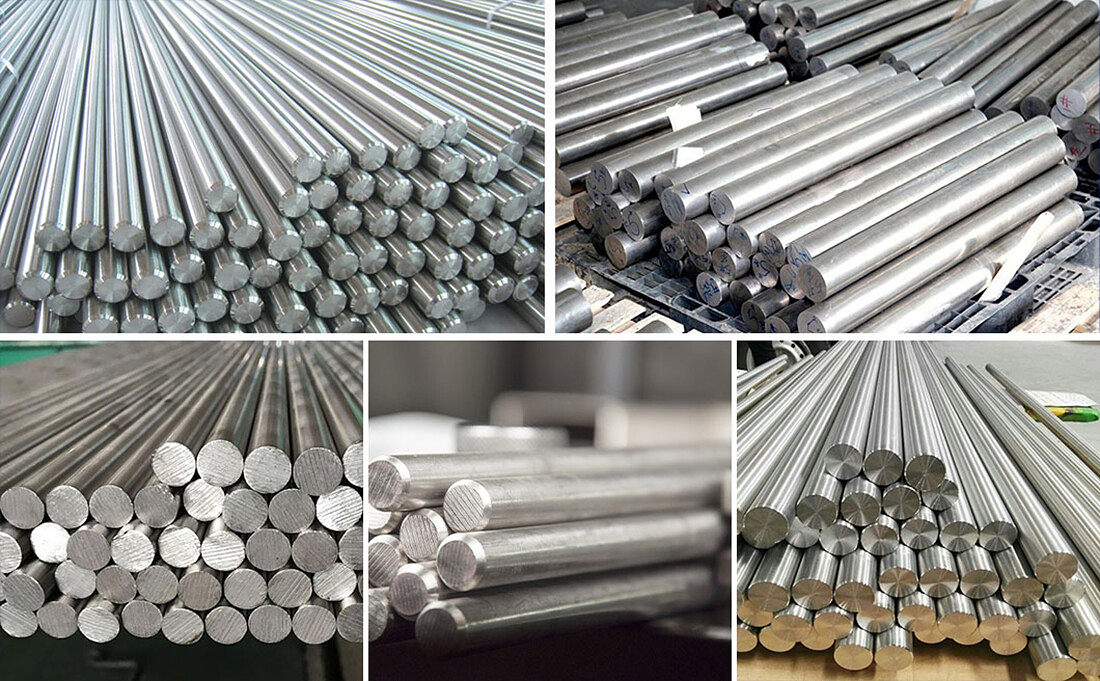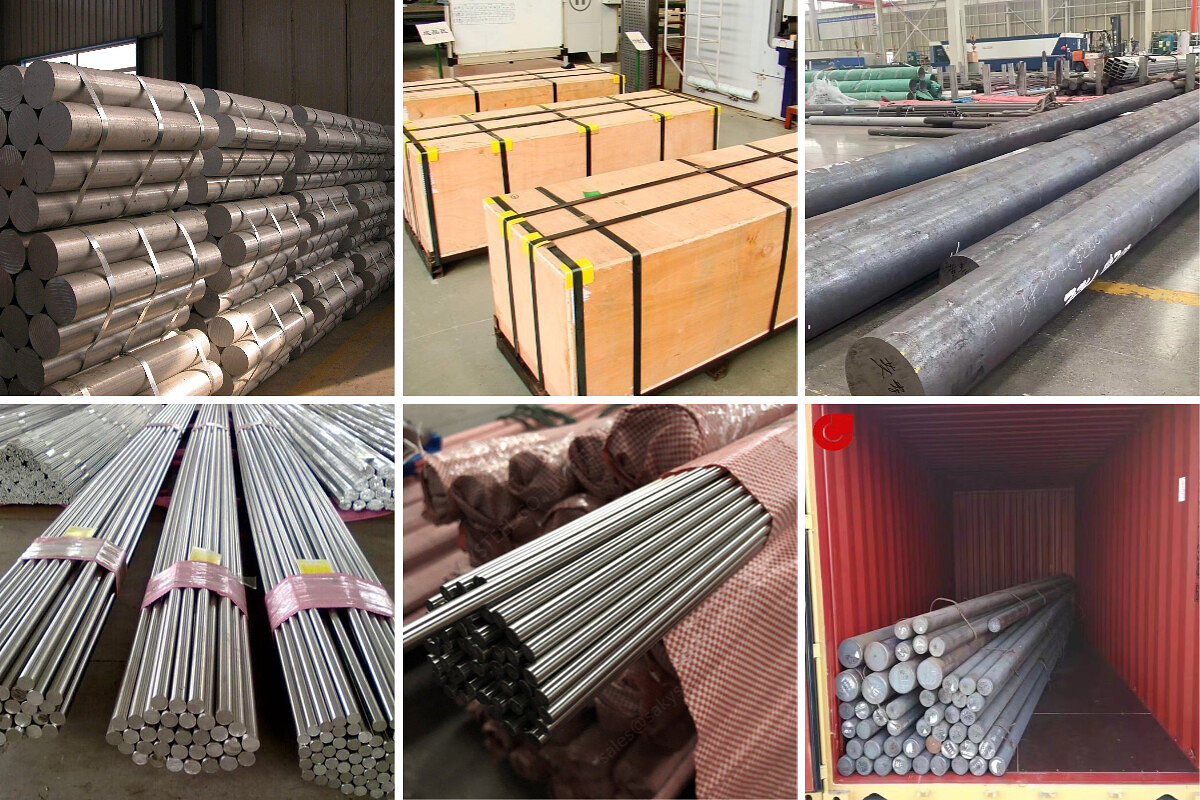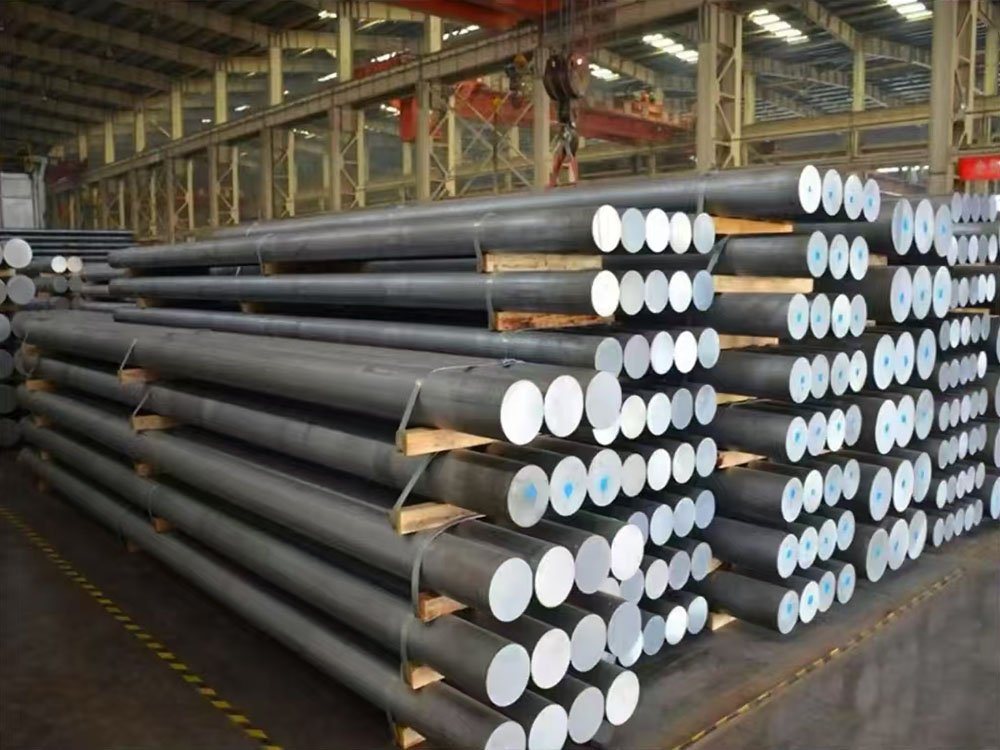

The characteristics of SS316 stainless steel bars mainly include the following points:
Corrosion resistance: SUS316 stainless steel belongs to austenitic stainless steel, containing a high proportion of nickel and molybdenum, so it has excellent corrosion resistance, especially in chloride ion environment, which can effectively prevent stress corrosion and pitting. Compared with other types of stainless steel (such as SUS304), SUS316 is more resistant to marine environment and chemicals.
High temperature resistance: SUS316 stainless steel has good high temperature resistance and can be used for a long time in an environment up to 870 degrees Celsius, and short-term use at higher temperatures will not affect its characteristics.
Good formability and weldability: Another significant advantage of SUS316 stainless steel is its excellent formability and weldability. During the manufacturing process, whether it is stamping, stretching, or bending, the material can maintain excellent processing performance. This provides great convenience for the production of parts with complex shapes. In terms of welding, SUS316 is also very weldable. After welding, the corrosion resistance of the material will not only not decrease, but will be enhanced due to the corrosion-resistant modified layer formed.
Chemical composition: The chemical composition of SUS316 stainless steel is the basis for determining its performance. Its main alloying elements include 16%-18% chromium, 10%-14% nickel, and 2%-3% molybdenum. Chromium increases the corrosion resistance of the material, nickel improves its toughness and plasticity, and the addition of molybdenum significantly improves the corrosion resistance of stainless steel in chlorides. In addition, SUS316 also contains trace amounts of carbon, silicon, manganese, and phosphorus to achieve physical and chemical properties that meet material standards.
Application scenarios and uses: Thanks to the stainless properties and good mechanical properties of SUS316, its application scenarios are very wide. In aerospace, marine engineering, and even the medical industry, SUS316 is everywhere. Specifically, in the chemical industry, SUS316 is widely used in reaction vessels, pipelines, valves and other equipment; in the aerospace field, SUS316 can be used as a structural part; in the field of medical devices, due to its excellent antibacterial and corrosion resistance, SUS316 has become an optional material for surgical tools, implants and other medical devices; in the food processing field, SUS316 is used to make storage tanks, delivery pipelines and equipment parts due to its corrosion resistance and cleanability.
| Product Name | Barra de acero inoxidable |
| Estándar | ASTM,JIS,DIN,GB,AISI,DIN,EN |
| Material | 201, 202, 301, 301L, 304, 304L, 316, 316L, 321, 310S, 904L, 410, 420J2, 430, 2205, 2507, 321H, 347, 347H, 403, 405, 409, 420, 430, 631, 904L, 305, 301L, 317, 317L, 309, 309S 310 |
| Técnica | Estirado en frío, Laminado en caliente, Laminado en frío y Otros. |
| Diameter | 6-12 mm o personalizable |
| Longitud | 1000 – 6000mm or Customizable |
| Tratamiento de superficies | BA/2B/NO.1/NO.3/NO.4/8K/HL/2D/1D |
| Origen | China |
| Código SA | 7220204000 |
| Plazo de entrega | {Tiempo de entrega} |
| Servicio posventa | 24 horas en línea |
| Capacidad de producción | {Capacidad de producción} |
| Condiciones de precio | EXW, FOB, CIF, CRF, CNF or others |
| Puerto de carga | {Puerto} |
| Plazo de pago | TT, LC, Cash, Paypal, DP, DA, Western Union or Others. |
| Aplicación | 1. Vajilla, armarios, tuberías interiores, calentadores de agua, calderas, bañeras |
| 2. Piezas de automóvil | |
| 3. Equipamiento médico, materiales de construcción, productos químicos, industria alimentaria, agricultura, componentes navales, etc. | |
| Embalaje | Paquete, bolsa de PVC, cinturón de nylon, atadura de cables, paquete marítimo de exportación estándar o como petición. |
| Servicio de tramitación | Doblado, soldadura, desbobinado, punzonado, corte y otros. |
| Tolerancia | ±1% |
| MOQ | {MOQ} |
Composición del acero inoxidable
El acero es una aleación de hierro y carbono. Los aceros inoxidables son aceros que contienen al menos 10,5% de cromo, menos de 1,2% de carbono y otros elementos de aleación. La resistencia a la corrosión del acero inoxidable y
Las propiedades mecánicas pueden mejorarse aún más añadiendo otros elementos, como níquel, molibdeno, titanio, niobio, manganeso, etc.
| Grado | C | Si | Mn | P | S | Cr | Ni | Mo | N | Cu |
| 201 | ≤0.15 | ≤0.75 | 5.5~7.5 | ≤0.060 | ≤0.03 | 16.00~18.00 | 3.5~5.5 | – | – | 0.08 |
| 202 | ≤0.15 | ≤1.00 | 7.5~10.00 | ≤0.060 | ≤0.03 | 17.00~19.00 | 4.0~6.0 | – | ≤0.25 | |
| 301 | ≤0.15 | ≤1.00 | ≤2.00 | ≤0.045 | ≤0.03 | 16.00~18.00 | 6.00~8.00 | – | ||
| 302 | ≤0.15 | ≤1.00 | ≤2.00 | ≤0.035 | ≤0.03 | 17.00~19.00 | 8.00~10.00 | – | ||
| 304 | ≤0.07 | ≤1.00 | ≤2.00 | ≤0.045 | ≤0.03 | 18.00~20.00 | 8.00~10.50 | – | ||
| 304L | ≤0.030 | ≤1.00 | ≤2.00 | ≤0.045 | ≤0.03 | 18.00~20.00 | 9.00~13.00 | – | ||
| 310S | ≤0.08 | ≤1.00 | ≤2.00 | ≤0.045 | ≤0.03 | 24.00~26.00 | 19.00~22.00 | – | ||
| 316 | ≤0.08 | ≤1.00 | ≤2.00 | ≤0.045 | ≤0.03 | 16.00~18.00 | 10.00~14.00 | 2.00~3.00 | ||
| 316L | ≤0.03 | ≤1.00 | ≤2.00 | ≤0.045 | ≤0.03 | 16.00~18.00 | 12.00~15.00 | 2.00~3.00 | ||
| 321 | ≤0.08 | ≤1.00 | ≤2.00 | ≤0.045 | ≤0.03 | 17.00~19.00 | 9.00~13.00 | – | ||
| 430 | ≤0.12 | ≤0.75 | ≤1.00 | ≤0.040 | ≤0.03 | 16.00~18.00 | – | |||
| 2205 | ≤0.03 | ≤1.00 | ≤2.00 | ≤0.030 | ≤0.015 | 22.00~23.00 | 4.5~6.5 | 2.5~3.5 | ||
| 2507 | ≤0.03 | ≤0.08 | ≤1.20 | ≤0.035 | ≤0.015 | 24.00~26.00 | 6.00~8.00 | 3.0~5.0 | ||
| 904L | ≤0.02 | ≤1.00 | ≤2.00 | ≤0.045 | ≤0.035 | 19.00~23.00 | 23.00~28.00 | 4.0~5.0 | 1.0~2.0 | |
| INCONEL028 | ≤0.03 | ≤1.00 | ≤2.50 | ≤0.030 | ≤0.030 | ≤28.0 | ≤34.0 | ≤4.0 | ≤1.4 | |
| MONEL400 | ≤0.30 | ≤0.5 | ≤2.00 | – | ≤0.024 | – | ≥63.0 | – | ≤34.0 | |
| INCONEL800 | ≤0.10 | ≤1.00 | ≤1.50 | – | ≤0.015 | ≤23.0 | ≤35 | 4.0~5.0 | – | ≤0.75 |